The Model Is No Longer the Product: Why Creative AI Is Becoming a Routing Problem
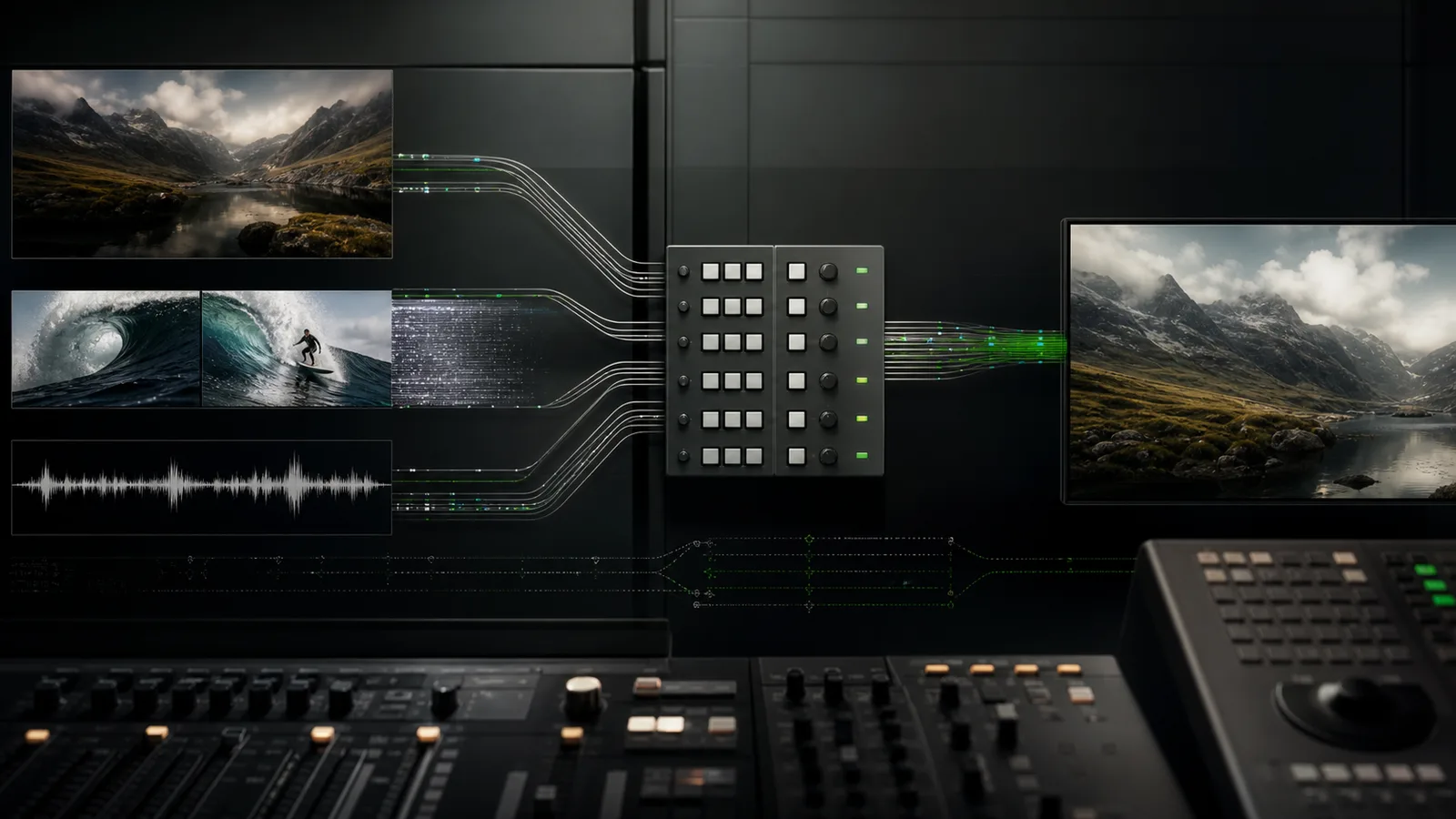
The first generation of creative AI products asked users to choose a model. The next generation increasingly asks for an outcome: a cheap storyboard, a fast social cut, a polished campaign frame, or a policy-safe localization. The platform decides which model should do the work.
That shift sounds like interface simplification, but it moves a consequential decision into infrastructure. A router can change cost, latency, style, safety behavior, reproducibility, and even which vendor receives the prompt. By 2026, choosing the model is no longer merely a dropdown setting. It is a production policy.
One interface, many models
Creative platforms now assemble image generators, video generators, speech systems, music models, upscalers, editors, and language models behind one workflow. The attraction is obvious. A team can keep assets, prompts, permissions, and billing in one place while using different engines for exploration and finish.
The model catalog is only the surface. Once a platform has several eligible engines, someone—or some system—must choose. Runway provides a current documented example: its API changelog says Model Router became available on 23 July 2026, with optimization preferences for cost, latency, or quality, plus allow/deny lists, modality credit ceilings, and a dry-run preview.
This is evidence that routing has become a product feature, not evidence that every platform routes in the same way. Scoring methods, evaluation data, commercial incentives, and fallback rules may be proprietary.
What a router actually decides
A credible router does more than sort a leaderboard. It first removes ineligible options, then scores what remains.
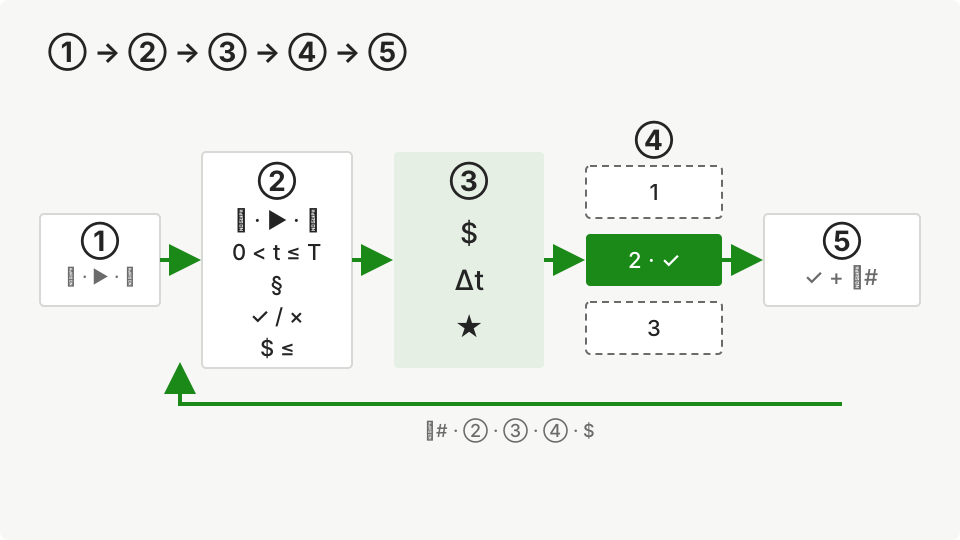
The request supplies constraints: modality, duration, aspect ratio, resolution, reference media, output count, region, rights, and deadline. The eligibility layer asks which models can technically and contractually serve it. A price ceiling can remove a high-cost option before a quality score is calculated. A policy rule can remove a model that does not support the required moderation or data-handling terms.
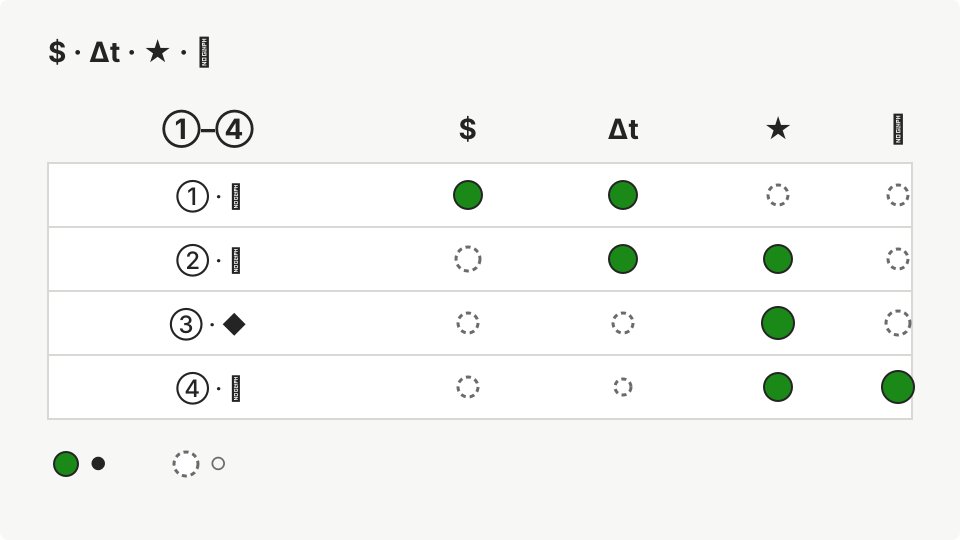
Only then does optimization make sense. “Cheapest” should mean cheapest eligible completion, not lowest sticker price. “Fastest” should include queue and retry behavior, not just inference time. “Highest quality” must refer to the use case: text rendering, motion, character continuity, dialogue, product fidelity, or some other measured requirement.
The five filters before quality
Production teams should expect at least five gates:
| Gate | Question |
|---|---|
| Capability | Can the model produce the modality, duration, controls, and resolution? |
| Policy | Is the request permitted, and does the output receive the required safety treatment? |
| Data governance | Where do prompts and assets go, and what retention or training terms apply? |
| Budget | Is the estimated generation within the project and modality ceiling? |
| Availability | Is the model healthy, within rate limits, and likely to meet the deadline? |
Quality without those gates is an invalid option. This is especially important when a workflow includes a person’s likeness, confidential pre-release material, regulated claims, or licensed brand assets. A model can be visually strong and still be operationally unavailable.
Routing changes the economics
The Runway pricing documentation says routed generations are billed at the standard price of the model selected, with realized cost reported in response metadata. That is a useful design choice: it preserves per-generation cost visibility. It does not remove price variance.
A routing system optimized for quality may choose a model that costs several times more than a drafting model. A system optimized for cost may require additional retries or finish work. The platform also controls the eligible catalog; commercial agreements can influence what is available even if they do not appear in the visible score.
Teams therefore need two controls: a ceiling before generation and an audit after it. A cost ceiling prevents one request from selecting an unaffordable configuration. The audit record reveals the chosen model, version, price, and reason so finance and production can reconcile the result.
| Use case | Primary priority | Required guardrail |
|---|---|---|
| Draft exploration | Cost and latency | Hard spend ceiling |
| Social output | Latency and acceptable quality | Aspect, safety, and deadline checks |
| Hero campaign | Quality against the brief | Human approval and retry budget |
| Regulated archive | Auditability and consistency | Locked model/version and provenance record |
The auditability problem
Routing makes a clean interface while creating a reproducibility problem. If the same request goes to a different model tomorrow, the output can change even when the prompt does not. A provider can update a model behind an unchanged name. A router can update its weights, eligible catalog, or price rules.
An audit-ready system should record at least the router configuration version, eligible set, excluded models and reasons, optimization objective, chosen provider/model/version, estimated and realized cost, relevant policy decision, random seed where supported, and references supplied. Without that record, a team cannot explain why two apparently identical jobs behaved differently.
Fallbacks deserve the same scrutiny. Automatically switching after a timeout improves reliability but may send assets to a vendor with different retention terms or return a style outside the approved campaign system. A fallback should be explicit in policy and visible in the job record.
There is also an incentive question. A neutral router would choose only against the customer’s declared objective and constraints. A commercial platform may have volume commitments, preferential pricing, owned models, or limited telemetry for third-party systems. None of those factors automatically makes the route poor, but they make disclosure important. Buyers should know whether “recommended” means predicted performance, lower platform cost, a commercial placement, or some blend.
Quality evaluation can create a second hidden bias. A router trained on generic preference data may favor cinematic motion while a retailer needs packaging fidelity, or favor polished speech while a localization team needs exact terminology. Teams should supply task-specific evaluations and periodically sample routes against human review. Otherwise automation replaces an explicit model choice with an implicit, unexamined taste.
A decision framework for creative teams
Before enabling automatic routing, answer six questions:
- What makes a model eligible for this project?
- Which objective—cost, latency, quality, or auditability—wins when they conflict?
- What is the maximum spend per request and per finished asset?
- Which vendor, region, and data-handling constraints are non-negotiable?
- What evidence explains the selection after the job completes?
- Who approves changes to the router configuration?
For exploration, broad automatic routing can be sensible. For a locked campaign, a constrained catalog and model version may matter more than theoretical optimization. For regulated or archival work, repeatability and provenance can dominate speed.
Ownership should be explicit as well. Creative operations can define acceptable visual outcomes, engineering can manage reliability, security can govern vendors and data flows, finance can set spend ceilings, and legal or policy teams can define restricted uses. No one function sees the full trade-off. A change-control process turns those perspectives into a versioned routing configuration rather than a sequence of private dashboard choices.
Start with recommendation mode before automatic execution. Let the system show the proposed model, reason, estimated cost, and excluded alternatives while a person confirms the route. Once the decisions are stable and the audit data shows acceptable outcomes, low-risk jobs can move to automation. High-risk or high-spend jobs can keep approval permanently.
The mature product is therefore not simply “every model in one API.” It is a controlled decision system with visible trade-offs. The router becomes the layer that translates a creative brief into infrastructure—and the layer teams will have to govern when the output, price, or policy result is challenged.
Sources
- Runway API Changelog — Model Router release date and documented configuration controls.
- Runway API Pricing & Costs — routed billing and realized-cost behavior.
- Runway Available Models — current example of a multi-provider creative catalog.