The Compute Bottleneck: Why AI Video Generation Is Still Expensive in 2026
Every few months, someone asks a version of the same question: text generation got cheap enough that it’s practically a rounding error, image generation followed close behind, so why does a ten-second AI video clip still cost real money? The answer isn’t a conspiracy about vendors protecting margins — it’s arithmetic. Video generation sits on a fundamentally different point on the compute-cost curve than text or images, for reasons baked into how diffusion and transformer models actually work, and those reasons are compounded by a hardware supply chain that is, as of mid-2026, genuinely capacity-constrained. Understanding both halves of that story explains why per-second video pricing from the major labs — figures in the tens of cents rather than fractions of a cent — isn’t a temporary launch-era premium. It’s closer to a cost floor that will erode slowly rather than collapse.
The order-of-magnitude gap, in FLOPs
Start with what a single generation actually costs in floating-point operations. Academic FLOPs analyses of diffusion pipelines have put a single image-generation call at somewhere in the range of 10 GFLOPs per denoising step, with a typical generation running 20 to 50 steps to converge on a clean image — call it on the order of 10² to 10³ GFLOPs total for one finished image. A comparable analysis of video diffusion models puts a single video generation call multiple orders of magnitude higher — commonly cited FLOPs comparisons land in the range of 10,000x the compute of a single image, not the 10x or 100x intuition might suggest. That gap isn’t a rounding difference; it’s the difference between a request a consumer GPU can serve in under a second and a request that occupies a datacenter-class accelerator for minutes.
Two things drive that gap, and it’s worth separating them because they compound rather than substitute for each other. The first is simple frame count: a five-second clip at 24 frames per second is 120 individual images, each of which still needs its own denoising pass. That alone is a two-order-of-magnitude multiplier before anything video-specific happens. The second, and the one people underestimate, is temporal consistency. A naive approach would generate each frame independently and stitch them together, but that produces the flickering, melting-face artifacts that defined early AI video. Modern models instead run attention mechanisms across the temporal dimension — every frame’s generation is informed by neighboring frames to keep faces, objects, and lighting coherent — and attention scales worse than linearly with sequence length. Stacking more frames into a single coherent generation doesn’t just add compute proportional to frame count; it adds compute for the cross-frame relationships between all of them.
What that looks like in dollars
Translate FLOPs into GPU-hours and the numbers get concrete. Datacenter-class accelerators like NVIDIA’s H100 and H200 rent for roughly $1 to $3 per hour on spot/wholesale cloud capacity in 2026, climbing toward $12 an hour on some major hyperscaler on-demand tiers. At spot pricing, generating a 30-second clip on an H100-class card takes on the order of four to six minutes of dedicated compute, which works out to single-digit cents per second of finished video at the raw hardware layer — nowhere near the price tags consumers see. That gap between raw compute cost and sticker price is itself informative: published API rates from the major video labs — Sora’s roughly $0.10 per second for standard 720p output, Kling’s credit-metered plans that scale from an $8–10 entry tier to a $128 Ultra tier for unmetered volume, Runway’s subscription credits rather than raw per-second billing — sit well above the marginal hardware cost per second. The difference isn’t pure margin. It covers model R&D amortized across a smaller installed base than any text model enjoys, the failed and retried generations that don’t make it to a paying customer’s screen, and increasingly a mandatory upscaling or enhancement pass — industry estimates suggest a large majority of production video endpoints now run some form of post-generation upscaling by default, which adds a second compute-intensive stage most users never see itemized.
Resolution compounds this further. Doubling output resolution roughly doubles render time on the same hardware, which is why 4K video generation — a genuine 2026 feature for models like Kling 3.0 — takes noticeably longer and costs noticeably more than the 720p tier most free and entry-level plans default to. None of this is arbitrary tiering; it maps fairly directly onto how many pixels the accelerator actually has to compute per second of footage.
The supply side: GPUs and power, not just algorithms
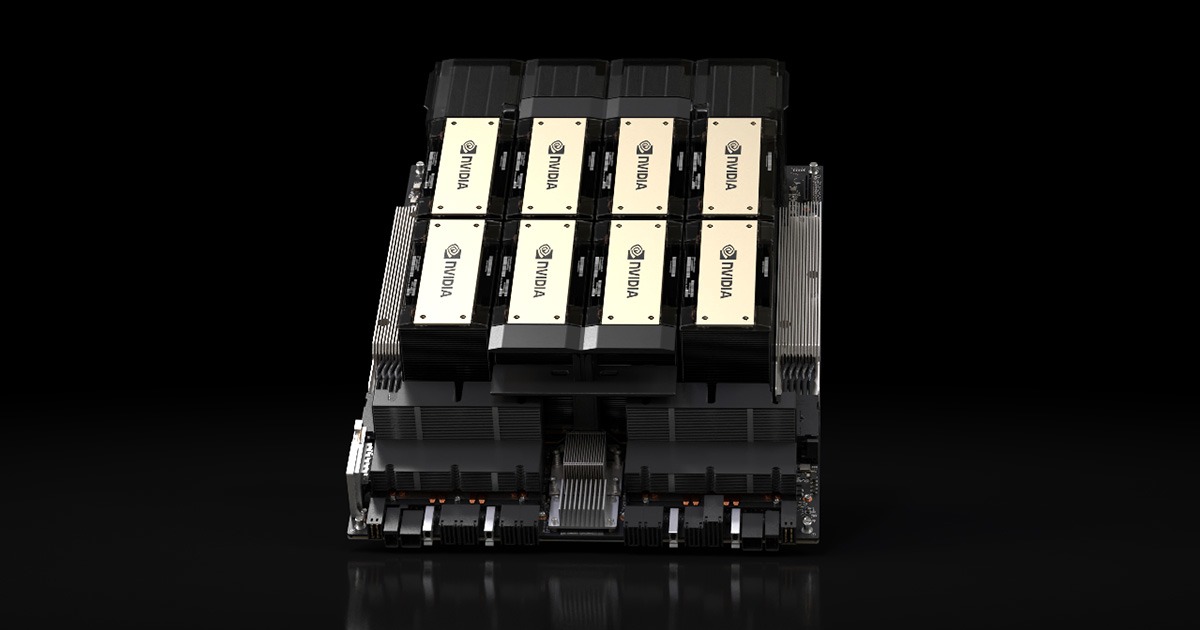
Even if every video lab found a way to shave compute per frame, 2026’s video generation market would still be running into a second, separate constraint: there simply isn’t enough datacenter-class GPU and power capacity to meet demand at today’s prices, let alone at hypothetically lower ones. Lead times for datacenter GPUs have stretched to 36–52 weeks as of this year, and demand is genuinely outstripping supply at the high end — reports of Chinese buyers alone placing orders for more than two million H200-class chips against a global on-hand inventory in the hundreds of thousands illustrate the scale of the mismatch. NVIDIA’s roadmap has moved past Hopper toward the Blackwell generation, but new architecture generations take years to reach the volume where they meaningfully loosen supply, and the memory-bandwidth-bound nature of video diffusion (video generation leans on high-bandwidth memory throughput more than raw FLOPs, which is part of why H100/H200-class cards with wide memory buses outperform cheaper alternatives disproportionately) means the specific chips video labs need are exactly the ones in shortest supply.
The bottleneck that’s newer to 2026, and arguably more durable than the chip shortage, is power. Analysts now describe AI infrastructure as power-bound rather than GPU-bound: Gartner projects that roughly 40% of AI datacenters will be power-constrained by 2027, and lead times for the high-voltage transformers and switchgear needed to bring new datacenter capacity online have stretched from 12–18 months to as long as 36–48 months in some markets. A GPU can be manufactured faster than a regional power grid can be upgraded to run it at scale. That mismatch means video generation capacity — which needs more power per finished output than text or image generation, simply because it needs more GPU-hours per output — is competing for a slice of electrical infrastructure that isn’t growing nearly as fast as chip production is.
Why this doesn’t collapse to text-generation prices soon
It’s tempting to assume video pricing will simply follow the trajectory text and image generation already walked — expensive at launch, then commoditized within a couple of years as models get more efficient and hardware gets cheaper. Some of that will happen: distillation techniques that cut denoising steps from dozens to single digits, more efficient temporal-attention architectures, and smarter caching that reuses computation across similar frames are all active areas of research, and each incremental win does lower cost per second. But video generation isn’t chasing a fixed target — as compute gets cheaper per frame, users push resolution, clip length, frame rate, and multi-shot complexity upward, absorbing the savings the same way image models did when photorealism improvements ate efficiency gains rather than translating them into lower prices. Layer the power and chip supply constraints on top, and the realistic expectation for the next year or two isn’t “video becomes as cheap as text” — it’s a slow grind downward in cost-per-second, gated less by anyone’s algorithmic cleverness than by how fast the physical infrastructure underneath the entire industry can be built.