AI Image Generation in 2026: Midjourney, Flux, and the New Photorealism Race
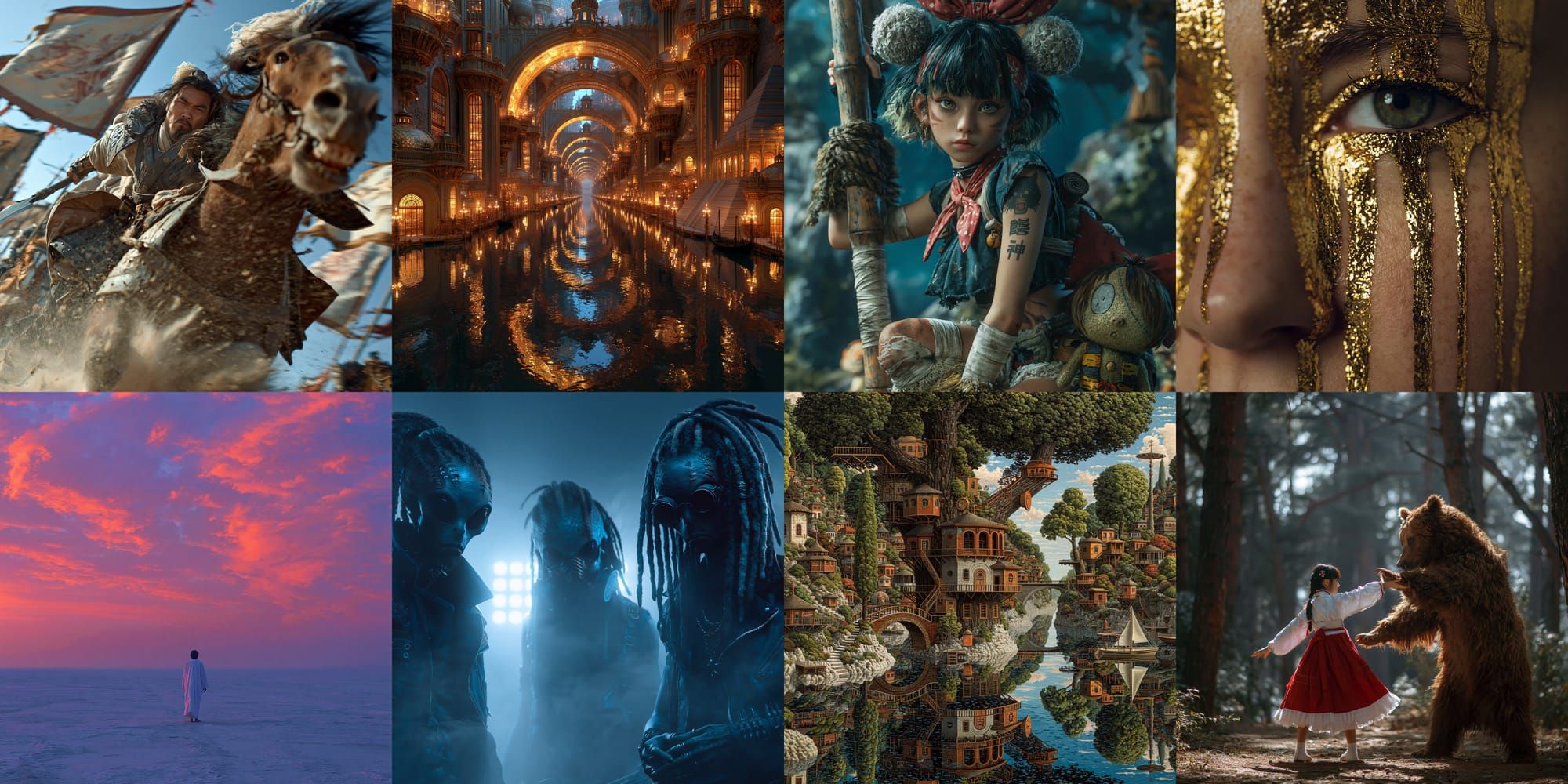
Two years ago, spotting an AI-generated portrait was a parlor game: count the fingers, check the earrings for symmetry, look for the waxy sheen that gave away a diffusion model no matter how good the prompt was. That game has gotten a lot harder in 2026. The leading image models now render individual skin pores, the way stubble catches sidelight, and hands with the correct number of knuckles often enough that “just look at the hands” stopped being reliable advice sometime in the last year. That progress hasn’t come from one lab pulling ahead and staying there — it’s come from two very different approaches pushing each other. On one side, Midjourney keeps refining a closed, curated model that most people never touch a settings panel to use. On the other, Black Forest Labs’ Flux line has turned open-weight image generation from a hobbyist’s compromise into something professional pipelines build on directly. The distance between “looks like a photo” and “is obviously AI” has never been this narrow, and it’s worth being specific about which model closed which part of that gap.
Midjourney: curation over control
Midjourney’s advantage has never really been raw technical capability — it’s taste, delivered with zero setup. The current default, V8.1, became the standard model on midjourney.com on June 10, 2026, following a V8 Alpha that Midjourney opened to the community on March 17, 2026. The headline change from V7 to V8 was Omni Reference, a system for holding a character’s face, outfit, or object consistent across generations without the fiddlier reference-image workarounds V7 required, paired with a new —hd mode that natively renders at 2K and roughly five times faster generation than the previous version. On photorealism specifically, independent testing comparing V7 against V6 found more photorealistic output in 23 of 30 standardized prompts, with measurable gains in skin texture, fabric detail, and shadow rendering — and V8.1 extends that trend further, particularly in close-up portrait work where light now wraps around a jawline or catches individual hair strands in ways that read as photographed rather than rendered.
None of that comes free, and Midjourney has never pretended otherwise: there is no permanent free tier in 2026, and the four subscription plans run Basic at $10/month, Standard at $30, Pro at $60, and Mega at $120, with roughly 20% off any tier if you pay annually. Every plan carries commercial usage rights, and Stealth Mode — private generations invisible to Midjourney’s public community feed — is reserved for Pro and above. What that money buys isn’t raw model access so much as a specific aesthetic sensibility baked into the weights: Midjourney images tend to look considered, art-directed, intentional, even from a three-word prompt. Notably, Midjourney doesn’t participate in third-party benchmarking arenas like Artificial Analysis, which track blind human preference votes across dozens of competing models — a choice that keeps it out of head-to-head Elo comparisons but hasn’t dented its standing with the working artists and designers who make up its core audience.
Flux: the open-weight model that professionals actually deploy
Black Forest Labs, founded in 2024 by former Stability AI researchers, has spent the past two years arguing that “open” and “frontier” don’t have to be opposites, and FLUX.2 — released November 25, 2025 and still the company’s flagship line in mid-2026 — is the clearest evidence for that argument yet. Rather than a single model, FLUX.2 ships as a family tuned for different points on the speed-versus-control spectrum: FLUX.2 [pro] is a fully managed API tier built to match closed frontier models on quality while running faster and cheaper; FLUX.2 [flex] exposes step count and guidance scale directly to developers who want to hand-tune the quality-versus-speed tradeoff; FLUX.2 [dev] is a 32-billion-parameter open-weight model, downloadable from Hugging Face, that Black Forest Labs calls the most capable open-weight image model available and that runs — via an fp8 reference implementation built with NVIDIA and ComfyUI — on consumer GeForce RTX cards rather than requiring a data-center GPU; and FLUX.2 [klein], added in January 2026 as an Apache 2.0-licensed, size-distilled variant, targets the fastest, lightest end of the range for on-device and edge use.
The technical claims are specific rather than vague marketing language: multi-reference support for combining up to 10 input images into one coherent output, editing at resolutions up to 4 megapixels while preserving fine detail, and — the part that matters most for the photorealism throughline — Black Forest Labs’ own benchmarking shows FLUX.2 [dev] winning 66.6% of blind text-to-image comparisons against Alibaba’s Qwen-Image and 59.8% against Qwen-Image-Edit in single-reference editing, with even sharper margins against its own FLUX.1 [dev] predecessor.
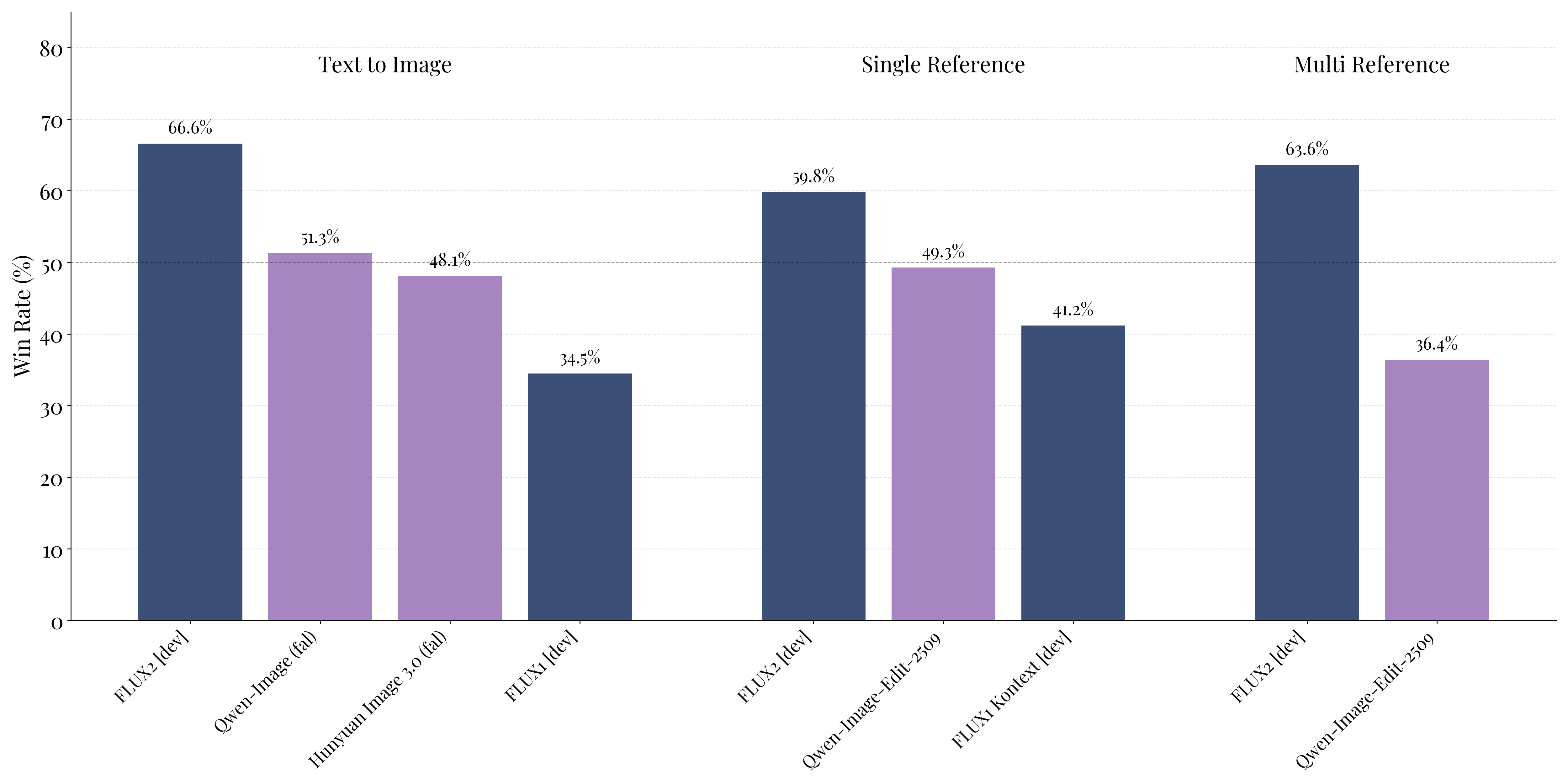
What that translates to in practice is a model that no longer forces a tradeoff between “open enough to inspect and fine-tune” and “good enough to ship.” A designer can pull FLUX.2 [dev] onto a local workstation, run it through ComfyUI, and get lighting and skin rendering that would have required a closed API a generation ago — with the auditability and zero-marginal-cost generation that only weights-in-hand actually provide.
Where the photorealism gap actually narrowed
The specific, measurable dimensions of “looks real” have moved together across the field this year rather than any one lab owning all of them. Skin has been the most visible shift: models trained heavily on retouched, beauty-filtered photography used to default to a plastic, over-smoothed look regardless of prompt, and 2026’s leading systems — Midjourney’s V8.1, FLUX.2, and rivals like Google’s Nano Banana Pro and OpenAI’s GPT Image 2 — now render visible pore texture, asymmetric blemishes, and the way different skin tones scatter and absorb light differently, rather than flattening everyone toward the same airbrushed default. Hands, the industry’s long-running punchline, have improved less dramatically but still meaningfully: extra or fused fingers are now the exception in flagship models rather than a coin-flip, though close inspection under demanding poses — hands gripping objects, overlapping fingers, unusual angles — still occasionally gives models away. Lighting is arguably the biggest structural win: both Midjourney and Flux now handle indirect and mixed light sources — a face lit by a window on one side and a lamp on the other — with physically plausible falloff and color temperature blending, something that reliably broke models as recently as 2024.
On the competitive-benchmark side, OpenAI’s GPT Image 2 currently tops the Artificial Analysis Image Arena — which ranks models purely on blind human preference votes — with an Elo score reported around 1337 to 1339, a first-to-second gap the leaderboard’s maintainers describe as the largest they’ve recorded, while FLUX.2 holds the strongest position among genuinely open-weight entrants and Midjourney sits outside the ranking by choice rather than by loss. None of that makes photorealism a solved problem — fine text inside a photorealistic scene, unusual anatomy, and physically impossible reflections still trip up every model listed here often enough to matter for professional retouching work. But the trajectory is unmistakable: the tell-tale signs that made “spot the AI image” a reliable party trick two years ago are disappearing one at a time, and the two very different paths — Midjourney’s curated closed model and Black Forest Labs’ inspectable open weights — are converging on the same result from opposite directions.
What this means for the rest of 2026
The practical upshot for anyone choosing a tool right now is that “which model is more photorealistic” is a less useful question than it was even a year ago — the honest answer, for most everyday prompts, is that several flagship models clear the bar. The more useful question has shifted to workflow: whether you want Midjourney’s zero-configuration aesthetic judgment for a fixed monthly fee, or Flux’s inspectable, locally-runnable weights for a pipeline where control, cost at scale, and auditability matter more than picking the single highest-scoring model on a leaderboard. Expect that split to sharpen rather than resolve — closed platforms doubling down on curation and ecosystem, open-weight labs doubling down on control and cost — because both bets have already proven durable enough that neither camp has any incentive to abandon it.
Limitations and decision checks
Showcase images do not prove repeatability, usable rights, or production cost. Compare candidates with your own prompt set at full resolution, record failed runs, and retain provenance and license terms for every image you approve.